I Know What Happened to Christopher Marlowe
Part IV: Connections
Sir Edward Master had many relevant connections that I have been able to find. I will report briefly on these.
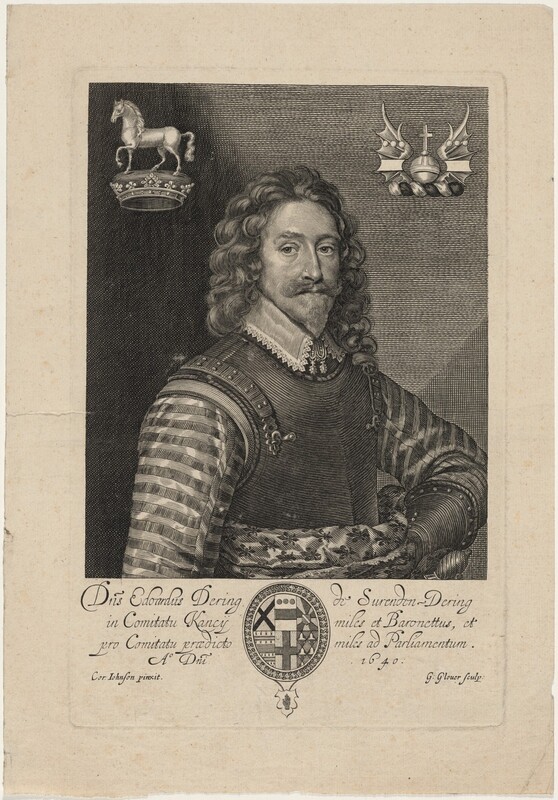
He knew Sir Edward Dering — owner of the earliest known manuscript of a Shakespeare play. This document, known as the Dering Manuscript, combines the plays Henry IV, Part 1 and Henry IV, Part 2 into one play. It is interesting to speculate whether the author might have overseen this redaction. Dering was also the first known person to purchase Shakespeare’s First Folio, as documented in his expense book.
Master’s father in law, who may have been an important figure in Marlowe’s life, was Robert Streynsham of Ospringe. Streynsham worked for William Herbert the First Earl of Pembroke as a secretary, and after the Earl’s death retained a connection to the family, which included William and Philip Herbert, dedicatees of Shakespeare’s First Folio. Streynsham owned the Arden house, in which the anonymous play Arden of Faversham (often attributed, in part, to Shakespeare) is set. Streynsham’s 1604 will mentions the son of one of the Marlowe family’s landlords, and two of Marlowe’s schoolfellows. The landlord’s son, William Nutt, had a son, John, who became Edward Master’s son in law and sat with him as a second MP for Canterbury in the short and long parliaments going into the Civil Wars.
Streynsham’s brother George was a catholic priest connected to Marlowe’s intelligence work in Flushing, The Netherlands.
The name Streynsham appears in the law student John Manningham’s diary, just before he documents attending a Shakespeare play, Twelfth Night. This may refer to Thomas Streynsham, Robert’s nephew, who studied law with Manningham at the Middle Temple.
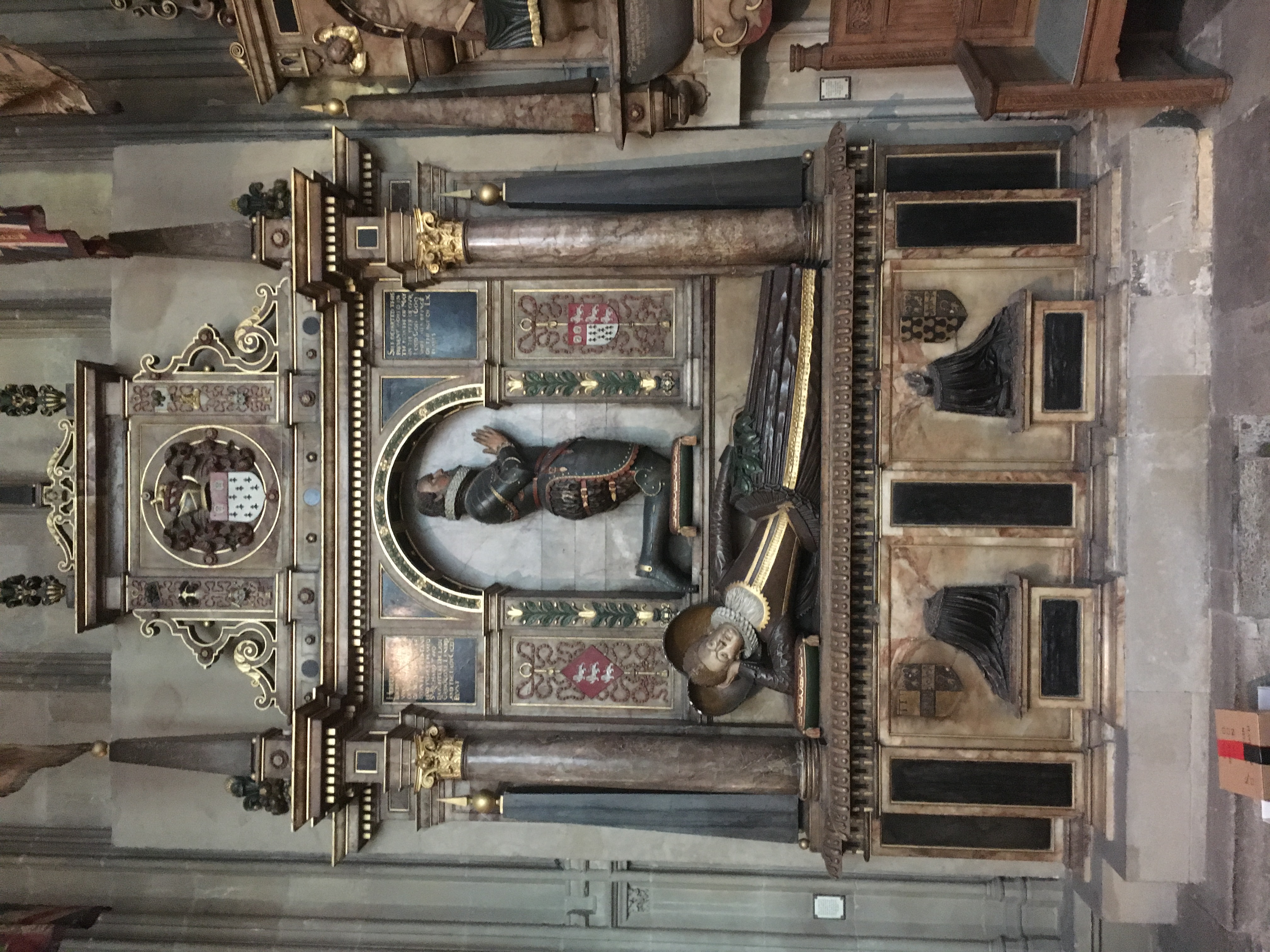
Buried next to Sir Edward Master in the Cathedral is a woman named Lady Mary Thornhurst, who died in 1609. She is referred to in Sir John Harington’s epigrams as “Galla”. These epigrams also refer to a character named “Paulus”, who is thought to be Sir Walter Ralegh, and a person named “Faustus” who may be Marlowe. She was the stepmother of the Shakespeare-collaborating playwright John Fletcher, who was orphaned aged sixteen. Her third and final marriage was to Sir Stephen Thornhurst, whose father had also been a landlord to members of Marlowe’s family.
Mary Thornhurst’s son in law Sir Henry Lennard was a close (“intimate”) friend of William Herbert, Third Earl of Pembroke, Shakespeare dedicatee — and his mother Mary (Sidney) Herbert, the Duchess of Pembroke, Marlowe dedicatee.
Edward Master’s brother Nathaniel died in 1633, and his wife remarried Sir Thomas Walsingham — son of Marlowe’s same-named patron, friend and employer. James Master, nephew of Sir Edward and adoptive son of Sir Thomas Walsingham, reports visiting his uncle at his lodgings in Canterbury Deanery, in his expense book.
Master’s “uncle Butler” (or Boteler, mentioned in his letters to Owen Gwyn) sold Poulton Manor in Woodnesborough, Kent to Marlowe’s school and college friend John Benchkin.
Sir Edward Master’s daughter was buried next to Sir Edwin Sandys’ daughter. Sir Edwin Sandys’ best friend George Cranmer (great-nephew of Thomas Cranmer, Henry VIII’s archbishop) was born in the same year as Marlowe, also in Canterbury. Marlowe may have grown up knowing Sandys and Cranmer. Sandys was a cousin of Henry Wriothesley, the Earl of Southampton — one of Shakespeare’s patrons. Both Sandys and Wriothesley headed the Virginia Company.
We have one of Marlowe’s poems thanks to Henry Oxenden of Barham, who wrote it down in one of his notebooks. This was an epitaph poem in Latin to Sir Roger Manwood, a disgraced Kentish judge. Edward Master was related to both Manwood and Oxenden: his father and brother were both married to Manwoods, and the Master and Oxenden families were connected by several marriages, starting with the marriage of Edward Master’s eldest son Richard to Henry Oxenden’s cousin Anne Oxenden, in 1627.
Intriguingly, the poet John Milton was also connected to this network: his father in law Richard Powell worked for George Brome, Robert Streynsham’s father in law. Edward Master was co-executor with Powell to the will of Brome’s daughter, Streynsham’s sister in law. Edward Master’s grandson William Master became rector of the parish of Holton, Oxfordshire — where Powell, Brome and John Milton’s father had been based.