I Know What Happened to Christopher Marlowe
I used AI handwriting recognition to help track down the surviving playwright.
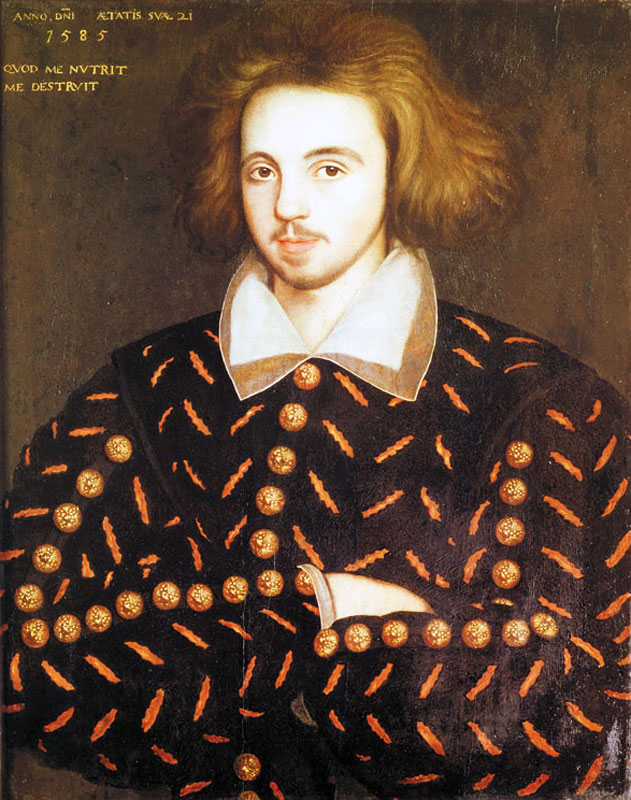
The plays and poems attributed to Shakespeare were actually written by Christopher Marlowe. Marlowe did not die in Deptford in 1593, but survived, and continued to write — with William Shakespeare of Stratford-upon-Avon acting as a front. So goes the Marlovian theory of Shakespeare authorship. Born a few months apart, Shakespeare’s name first appeared in print (on the title page of the poem Venus and Adonis) shortly after Marlowe’s apparent death at the age of twenty-nine. Many have noted the close similarity between their writing styles — especially when comparing Marlowe to early Shakespeare. Examples of Marlowe’s lines include:
Was this the face that launch'd a thousand ships,Doctor Faustus 5.1
And burnt the topless towers of Ilium?
My men, like satyrs grazing on the lawnsEdward II 1.1
Shall with their goat feet dance an antic hay
But stay: what star shines yonder in the east?The Jew of Malta 2.1
The loadstar of my life, if Abigail
Apart from being great poetry in their own right, these verses sound remarkably Shakespearean. If Marlowe were to be found living after 1593, it could upset the apple cart of Shakespearean authorship.
What really happened to Christopher Marlowe? If indeed he survived his apparent demise, what was his life like after Deptford? The Marlovian theory suffers from the fact that no one has found a convincing identity for a surviving Marlowe. This study seeks to change that.
I have concluded that, amazingly, Marlowe (after some time, likely spent on the continent) returned to his home county of Kent and lived a long life, assuming the identity of a country gentleman. He retained many of the same connections he had built through his younger life as Marlowe, and ended up being knighted and representing his home town of Canterbury as a member of parliament, going into the period of the English civil wars. He was buried with a (still existing) gravestone in Canterbury Cathedral — between a woman buried in 1609 (the year of the publication of Shakespeare’s Sonnets), and another woman buried in 1623 (the year of the publication of the First Folio of Shakespeare’s plays).
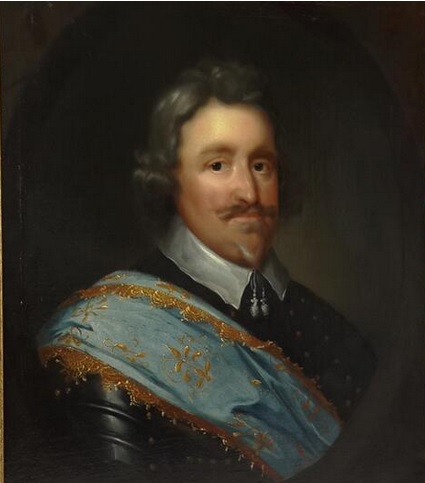
How did I come to this conclusion? By following a clue on a wall monument within the cathedral. The person whose grave is identified by that clue, Sir Edward Master, turns out to have had a wealth of relevant connections — and crucially, had the same handwriting as Christopher Marlowe. The latest AI tools are here used to demonstrate that Marlowe and Master wrote using the same hand.
To assume this new identity, Marlowe took the place of an existing person — the eldest son of a Kentish family, associated with Sandwich and East Langdon in Kent. What happened to the original Edward Master? I do not know. There are various possibilities, from an unrecorded death of natural causes to a new life and identity in the American colonies. Sadly there is little documentation relating to the young Edward Master (a handwriting comparison, for example, would obviously be useful). I assume that Marlowe took over the identity by 1602, when as Master he married Audrey Streynsham (echoed by the marriage of Touchstone and Audrey in As You Like It).
Edward Master’s father James seems to have fallen on hard times, and then rebuilt his fortune, around the period of Marlowe assuming his son’s identity. The entire family seems to have moved away from Sandwich, where Edward and his siblings were born and grew up. This may have helped with the change of identity. Initially, Marlowe may have lived primarily in East Langdon with his new father, within walking distance of the White Cliffs of Dover (a famous King Lear setting) — before settling in with his new family in Ospringe, near Faversham, where his wife inherited the lease of the parsonage (sadly now gone). He lived in Ospringe for many years before moving into the Deanery in Canterbury Cathedral precincts — the Dean (Isaac Bargrave) having been removed by Colonel Ned Sandys as part of the parliamentarian civil war conquests. He lived in the Deanery until his death in August 1648. As Marlowe, he would have been 84 years old.
Note, in the following I will refer to the author known as Shakespeare as Shakespeare, and Edward Master post-1602 as Edward Master, for clarity — although I believe both were in fact identities of the later Christopher Marlowe.
First, we shall look at his handwriting.