I Know What Happened to Christopher Marlowe
Part III: Why Edward Master? A Monumental Clue
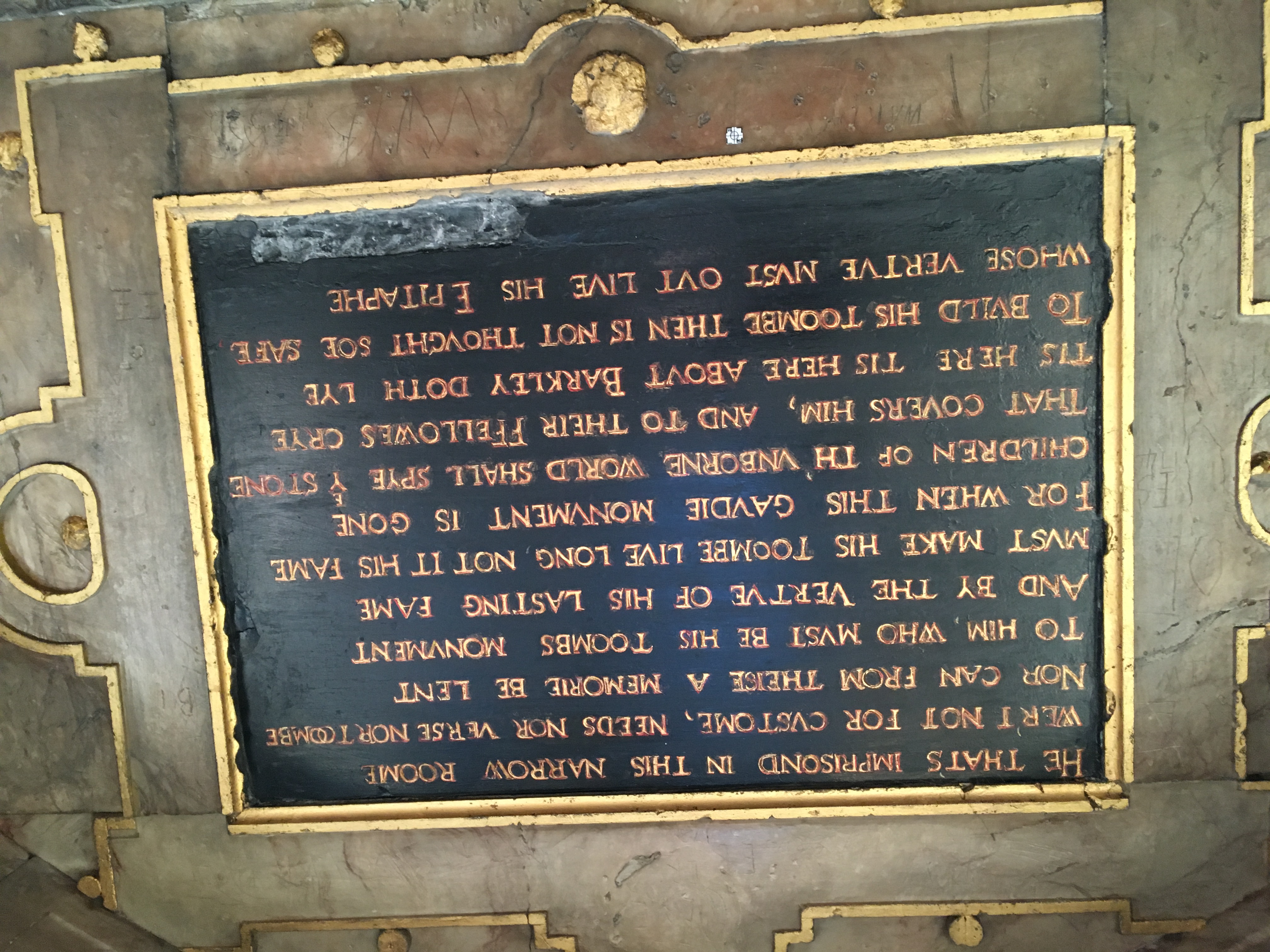
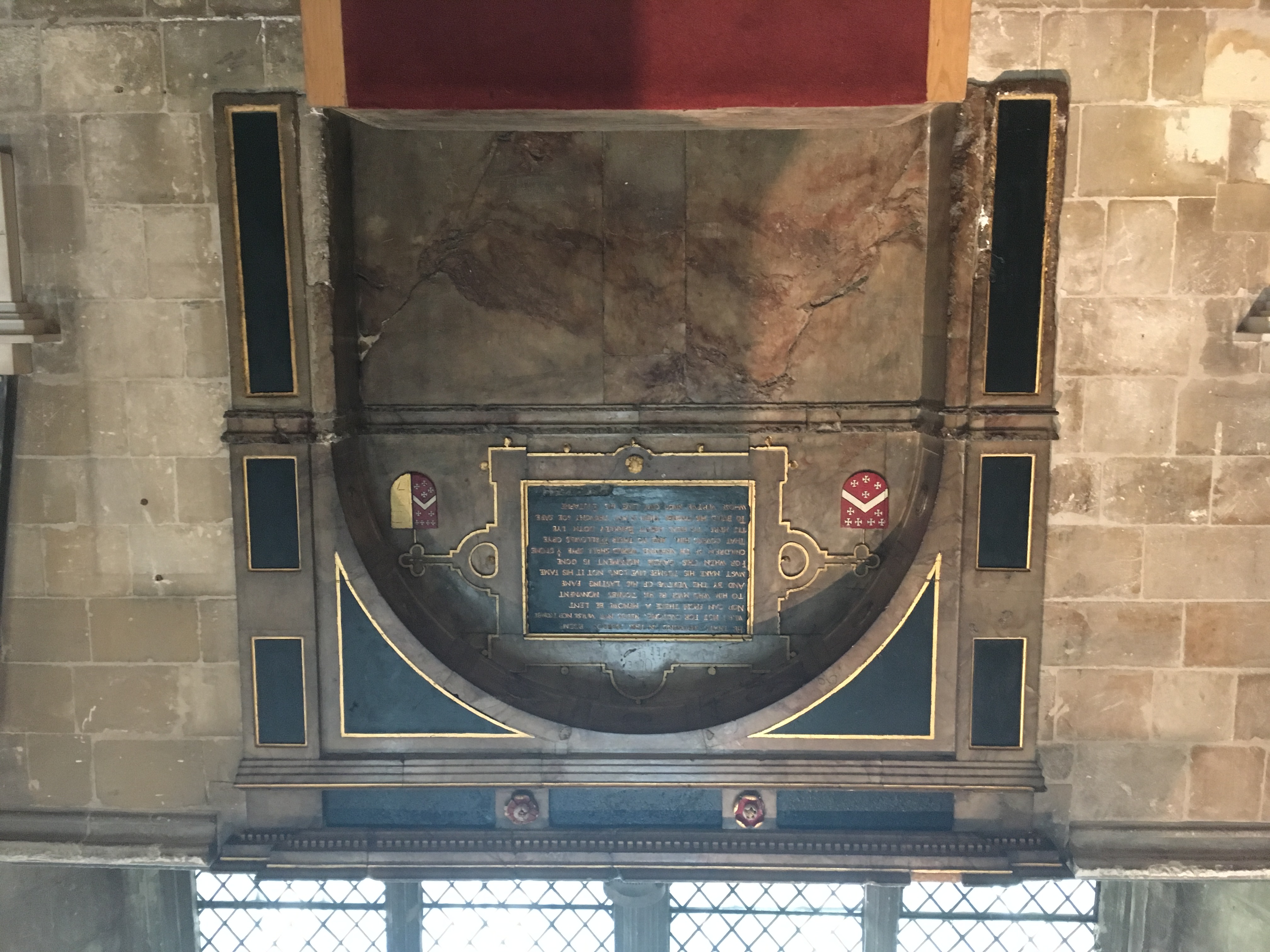
Against the South wall of the nave of Canterbury Cathedral stands an often-ignored monument bearing an enigmatic inscription. It apparently eulogises a man named Barkley, in twelve lines of poetry:
He that's imprisond in this narrow roome
wer't not for custome, needs nor verse nor toombe
Nor can from theise a memorie be lent
to him, who must be his toombs monument
And by the vertue of his lasting fame
must make his toombe live long not it his fame
For when this gaudie monument is gone
children of th'unborne world shall spye ye stone
That covers him, and to their FFellowes crye
tis here tis here about Barkley doth lye
To build his toombe then is not thought soe safe
whose vertue must out live his Epitaph
The poem seems quite obstinate in its refusal to go into specifics about its subject — although it claims he has “lasting fame”. It focuses strongly on the gravestone, or tomb — which is no longer apparent anywhere near the monument, if it ever was. The twelve lines contain a mixture of some more poetic language — “imprisond in this narrow roome”, “children of th'unborne world” — and some more awkward turns — the repetitions of “nor” on the second and third lines (“nor verse nor tomb” meaning “neither verse nor tomb”, immediately followed by “Nor can …”), rhyming of “lasting fame” with “it his fame” (forgoing the obvious choice of “name”), and the quirkiness of “tis here tis here about”.
Adding to the mysterious nature of this monument, in the place where one would expect to find the date of death (and perhaps also the age of the deceased) — on the right hand side, below the inscription — this information has been removed by rough gouging out of the stone. It appears that there was also once a monumental effigy underneath the inscription, which has at some point been removed.
The “Barkley” of the inscription has been identified as Robert Berkeley, who was an MP for Chippenham in Wiltshire, and was buried in the Cathedral in September 1614. His will wasn’t proved until July 1616 — two months after Shakespeare’s death, and nine days before the latter’s own will was proved.
The poem claims that its subject has “lasting fame”. However, this is clearly not true of Berkeley, who seems to have been the least notable or famous person within his own family. Apart from being an unremarkable MP (an unpaid position at the time), little today seems to be known about him. Compare his mother, who was a lady in waiting to Queen Elizabeth, or his father — a knight and standard bearer to three Tudor monarchs. His four brothers, unlike himself, were all knighted. His eldest (half-) brother, Sir Henry Berkeley, was a friend and neighbour of Sir John Harington, the queen’s godson. Sir Henry was also the stepfather of Thomas Russell — the overseer of Shakespeare’s will, made in Stratford upon Avon in March 1616.
Though the poem refers several times to a tomb or gravestone, there is not one noted in any of the descriptions or plans of the original Norman floor of the nave, prior to its resurfacing in the eighteenth century.
Another oddity is that in Berkeley’s will, he insisted in fierce (and puritanical) terms that he didn’t want an expensive church memorial:
I will not sewe my monstruous and moste filthie ragge to the garment of [God’s] righteousness. My body I woulde have buryed in playne and Christian manner withoute vaine pompe.
Instead of which he got a self-styled “gaudy monument” within the main body of one of the most important churches in the country.
In the same will, he appointed four overseers. The first overseer he named was Sir Thomas Palmer, a first cousin on his mother’s side. Palmer was married to Margaret Digges, whose brothers were the poet Leonard Digges and the diplomat Sir Dudley Digges. Leonard wrote a prefatory poem in the First Folio of Shakespeare’s plays. Thus Berkeley was in a second way connected to the two most notable people associated with William Shakespeare at the time of his death in Stratford — Thomas Russell and Leonard Digges. These men were themselves related — Russell was Digges’ stepfather, and raised Leonard, Dudley and Margaret as the second husband of Anne née St Leger (of Leeds Castle, Kent), after the death of the first, their father Thomas Digges — a court-associated astronomer. The Kentish Digges family provide a wealth of fascinating connections — relating to Shakespeare, Marlowe (at least one member of the family was a schoolfellow), Ben Jonson, the King James Bible (via Archbishop George Abbot), and early British colonialism in the Virginia and East India Companies.
So what is the purpose of this peculiar monument, whose content seems to so poorly fit its apparent subject? In the poem, note the space between “here” and “about” — in the tenth line. This could reasonably break the line into “tis here tis here” (a more sensible exclamation), and “about Barkley doth lie”. “Tis here, tis here about” seems a strange thing for anyone, adult or child, to say upon apparently seeing the exact gravestone being looked for. Could the phrase “about Barkley doth lie” suggest that the inscription is not in fact talking about Robert Berkeley, but someone else? Someone who “must be his tomb’s monument” — still standing outside of it — and still alive at that time? Perhaps a still-living Christopher Marlowe, Canterbury’s famous literary son?
If so, the inscription’s true, hidden subject is only slightly hinted at. But given Berkeley’s relevant connections, the timing of the monument’s construction, and the mysterious description of a person too famous to be memorialised, I believe this is worth considering.
There is a riddle here, awaiting solution. The poem’s first line, “He that’s imprisond in this narrow roome”, at first glance seems to be talking about burial in a grave or tomb. But what if the “narrow roome” being referred to is the interior of the Cathedral, or nave, itself? Is there a connected place in the church where a gravestone could be said to be “imprisond”?
There is — Saint Michael’s, or the Buffs’ chapel, “parted off by iron grates and doors”. There you can find a few gravestones. Only one of these fits the bill: that of Sir Edward Master.